

Get started with Veea

Tell us about your sites and what you want to run on them, and a Veea team member will follow up.

Prefer the full page? Go to Contact.

VHH09 · VHH10 · VeeaONE Platform™

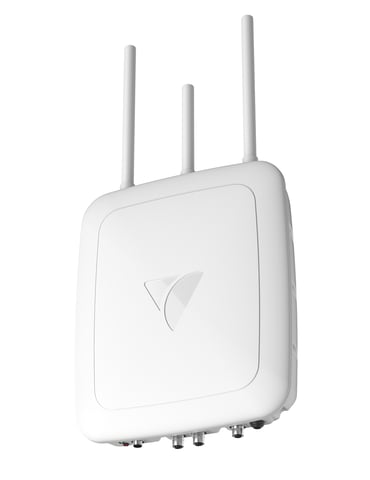
VeeaHub Pro Outdoor and Pro Outdoor S

Rugged, IP65 edge systems for wall- or pole-mounted deployments, operating from −40 to 65 °C (−40 to 149 °F).

Bring Wi-Fi, IoT connectivity, vMesh and containerized edge computing closer to outdoor devices and data, with LoRaWAN and cellular options available by model and configuration.
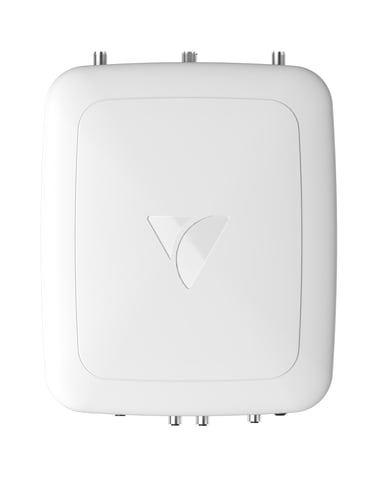
  • IP65
  • −40 °C
  • 65 °C
  • Wall or pole
  • M12 connectors
  • PoE 802.3bt Type 3
  • 2.5G / 5G Base-T
  • RS232 / 422 / 485
  • LoRaWAN 900 / 868 / 470 MHz
  • 4G CAT-19
  • 5G Sub-6
  • GNSS
  • Zigbee 3.0
  • Thread
  • Bluetooth LE
  • vMesh
  • Secure Docker containers
  • 48 VDC
At a glance

Edge infrastructure for outdoor and exposed sites

  • Built for outdoor installation

    An IP65, fanless enclosure designed for wall- or pole-mounted operation from −40 to 65 °C (−40 to 149 °F).

  • Sealed power and interfaces

    Supported PoE carries power and network connectivity over one cable. Sealed M12 interfaces provide additional Ethernet and serial connections for compatible site equipment.

  • Wireless connectivity across the site

    Use Wi-Fi, vMesh and supported IoT radios close to outdoor devices, with LoRaWAN and 4G/5G options varying by model and configuration.

  • Run applications locally

    Integrated Linux-based compute runs approved, signed containerized applications near the equipment and data they use, with memory and storage options depending on the configuration.

Operating environment

The rooftop in August, the yard in February

VeeaHub Pro Outdoor and Pro Outdoor S are rated for operation from −40 to 65 °C (−40 to 149 °F) in an IP65 enclosure.

The extended operating range supports deployment on rooftops, walls, poles and other exposed locations where indoor VeeaHub models are not designed to operate.

VeeaHub Pro Outdoor / Pro Outdoor S VHH09 · VHH10 · −40 to 65 °C IP65
VeeaHub Pro / Pro S VHE09 · VHE10 · 0 to 50 °C
VeeaHub STAX VHC25 · 0 to 40 °C

Actual site suitability depends on installation, sealing, power, mounting, solar exposure and local regulatory requirements.

On site

One outdoor edge point. Several ways to connect.

Mount a VeeaHub Pro Outdoor system near the devices and equipment it serves. Depending on the model and configuration, it can connect long-range sensors, nearby wireless devices, other VeeaHubs and a cellular network while running applications locally.

What it reaches
Choose a connection

Supported LoRaWAN configurations connect compatible low-power sensors across outdoor areas.Wi-Fi, Bluetooth LE, Zigbee and Thread connect supported nearby devices and equipment.Wired or wireless vMesh connects the unit with other supported VeeaHubs across the site.Optional 4G or 5G connectivity can provide primary, secondary or backup backhaul.

IP65 sealed
The hub A full VeeaHub inside
  • PoE or 48 VDC power
  • Sealed Ethernet
  • Sealed serial
  • Local edge applications
  • M12 Ethernet 1PoE 802.3bt Type 3
  • M12 Ethernet 22.5G and 5G Base-T
  • M12 5-pin serialRS232 / 422 / 485
  • DC input48 VDC at 1.5 A
  • Works at −40 °CIn the yard in February
  • Works at 65 °COn the roof in August
  • Sensors across the siteLoRaWAN 900 / 868 / 470 MHz
  • Devices on the siteWi-Fi, Bluetooth LE, Zigbee, Thread
  • The next hub alongvMesh backhaul
  • The carrier4G or 5G Sub-6, with GNSS
Three sealed M12 connectors support Ethernet and serial connections, while the protected DC input provides an alternative to PoE. From there, the hub can extend connectivity to nearby devices, sensors, other VeeaHubs and cellular networks, depending on the model and configuration.
Choose a model

VeeaHub Pro Outdoor or Pro Outdoor S

Both models share the same IP65 enclosure, extended operating range, sealed interfaces, compute platform and VeeaONE management environment. Choose between them based on LoRaWAN requirements, Wi-Fi radio configuration and cellular connectivity.

VHH09Pro Outdoor

Best suited to outdoor deployments centered on long-range LoRaWAN sensing.

  • LoRaWAN connectivity at supported regional frequencies
  • One 5 GHz 4×4:4 radio shared by client access and wireless vMesh
  • Up to 8 SSIDs across the Wi-Fi radios
  • Optional 4G LTE connectivity with GNSS
  • 4 GB of memory, with an 8 GB option
VHH09 datasheet

VHH10Pro Outdoor S

Best suited to deployments requiring dedicated wireless mesh capacity or advanced cellular options.

  • Two independent 5 GHz 4×4:4 radios
  • Client access and wireless vMesh can use separate radios
  • Up to 12 SSIDs across the Wi-Fi radios
  • Available configurations for LoRaWAN and supported 4G or 5G connectivity
  • 4 GB of memory, with an 8 GB option
VHH10 datasheet
Technical specifications

VeeaHub Pro Outdoor and Pro Outdoor S specifications

Compare the compute, wireless connectivity, sealed interfaces, power requirements and environmental specifications of VHH09 and VHH10.

Specification Pro Outdoor VHH09 Pro Outdoor S VHH10
Compute and storage
Processor Arm ARMv8, 64-bit quad-core at 1.5 GHz
Hardware acceleration Cryptography engine
Memory 4 GB PCDDR4, with an 8 GB option available
Internal storage 32 GB eMMC flash
External storage Up to 2 TB via microSDXC
Software environment Linux server with a virtualized software environment for Secure Docker 2 containers, Software Defined Networking (SDN) and Network Function Virtualization
Applications Containerized applications, built with the VeeaHub Developer Toolkit and the Veea Developer Portal
AI Support for no-code AI workflows
Wi-Fi
Standard Dual-band IEEE 802.11 a/b/n/ac Tri-band IEEE 802.11 a/b/g/n/ac
Frequency bands 2.4 - 2.484 GHz (ISM); 5.17 - 5.25 GHz (U-NII-1); 5.25 - 5.33 GHz (U-NII-2); 5.49 - 5.73 GHz (U-NII-2e); 5.73 - 5.83 GHz (U-NII-3)
Bandwidth 20, 40, 80 MHz
Radio chains and peak PHY rates
2.4 GHz 2x2:2, up to 300 Mbps
5 GHz 5.2 GHz: 4x4:4, up to 1733 Mbps, serving clients and vMesh together 5.1 - 5.3 GHz and 5.4 - 5.8 GHz: two independent radios, each 4x4:4 up to 1733 Mbps
RF configuration 2.4 GHz: 2 internal antennas; 5.2 GHz: 4 internal antennas
Capacity
SSID management 8 SSIDs, 4 per Wi-Fi radio 12 SSIDs, 4 per Wi-Fi radio
Clients 128 clients per radio
Security and roaming
Wi-Fi security WPA-PSK, WPA-TKIP, WPA2 AES, WPA3, 802.11i; SSID (AP isolation); dynamic PSK
Other Wi-Fi features Channel selection (DFS/ACS); device roaming (802.11r); AP, hotspot
IoT and short-range radios
Bluetooth Bluetooth Classic 4.2; Bluetooth 5.x (Bluetooth Low Energy)
Zigbee Zigbee 3.0, Zigbee Pro
Thread Supported, with 6LoWPAN
IoT gateway toolkit IoT Gateway Application toolkit with automation tools and templates
Long-range and cellular WAN
LoRaWAN
LoRaWAN connectivity Fitted on the unit Available on the base model or alongside the 4G module
Available frequencies 900 MHz, 868 MHz, 470 MHz
4G / LTE module (optional)
LTE category CAT-4 CAT-4 with an internal uSIM, or CAT-6 to CAT-19 with an internal uSIM and internal eSIM
SIM uSIM tray behind the access port Internal uSIM, plus an internal eSIM on CAT-6 to CAT-19
GNSS Supported with the 4G / LTE module Supported with the 4G / LTE module or the 5G module
5G module (VHH10)
5G NR 3GPP Release 16 NSA/SA operation, Sub-6 GHz; Qualcomm Snapdragon X62-based; uSIM tray behind the access port; internal eSIM; GNSS
Ports and interfaces
Ethernet port 1 1x 10/100/1000 Base-T with PoE support, M12 connector
Ethernet port 2 1x 10/100/1000/2.5G/5G Base-T, M12 connector
PoE Supported on Ethernet port 1 (802.3bt Type 3)
Serial RS232/422/485, 1x M12 5-pin connector
Removable storage microSDXC slot
Controls Reset button
Indicators Status LEDs on the side panel
Every cabled connection is an M12 connector or the sealed DC input.
Networking, security and management
Mesh Wired or wireless with vMesh technology
IP IPv4, IPv6, dual-stack
Network security Stateful firewall; 802.1Q VLAN; 802.1x; VxLAN
Management Veea Control Center; VeeaHub Manager
Cloud Veea Cloud, with multi-tenant cloud management
One mesh and one fleet: a hub on a pole and every other VeeaHub on the estate answer to one console.
Enclosure, power and environment
Enclosure and environment
Enclosure rating IP65
Operating temperature -40 °C to 65 °C
Cooling Fan-less; no special cooling required
Physical
Dimensions (L x W x H) 360 mm x 295 mm x 90 mm
Weight 2.8 kg
Color White
Mounting options Wall; pole
Power
Power supply 48 VDC at 1.5 A
Power over Ethernet 802.3bt Type 3, on Ethernet port 1
Typical power consumption 60 W
Certifications and ordering
Electric certifications FCC / CE / KC / SSRC / UL
Model number VHH09 VHH10
Optional accessories VeeaCare packages; mounting kit
Warranty Limited device warranty, with VeeaCare extended warranty packages available

Country-specific regulatory information is available on request.

Deployment

From mounting to managed operation

  1. Plan the location

    Choose a wall or pole location based on coverage, device placement, available power, backhaul and environmental exposure. Installation must follow the required mounting, grounding and connector-sealing instructions.

  2. Provide power and backhaul

    Use supported PoE 802.3bt Type 3 or a 48 VDC supply. Backhaul can be provided through Ethernet, cellular connectivity or wireless vMesh, depending on the model and configuration.

  3. Provision the VeeaHub

    Claim and configure the unit through supported VeeaONE management tools. Connect the required vMesh, wireless networks, interfaces and local devices.

  4. Deploy applications and policies

    Distribute approved, signed containerized applications and site policies through the platform. Monitor the unit alongside other VeeaHubs through Veea Control Center and supported VeeaHub Manager functions.

The Outdoor models use the same VeeaONE provisioning, application-deployment and fleet-management workflow as the rest of the VeeaHub family.

Questions

Outdoor deployment questions

Can one cable carry power and data to the unit?

Yes, when the installation uses the PoE-capable M12 Ethernet port with compliant cabling and PoE 802.3bt Type 3 power-sourcing equipment. A 48 VDC supply can be used instead when appropriate for the site.

What protection does IP65 provide?

An IP65 enclosure is dust-tight and protected against water jets. It is not rated for continuous immersion. Maintaining the rating requires correct installation, approved connectors, properly fitted seals and covers, and adherence to the installation instructions.

What equipment can I connect by cable?

The Outdoor models provide two sealed M12 Ethernet interfaces and one M12 serial interface supporting RS-232, RS-422 and RS-485. Equipment compatibility depends on the required application, protocol, drivers and integration.

How far can LoRaWAN reach?

LoRaWAN range depends on frequency, antenna configuration, mounting height, terrain, buildings, vegetation, interference, device settings and local regulations. The deployment should be planned using the actual site conditions rather than a fixed distance estimate.

Can I run my own software?

Yes. Developers can build supported containerized applications using Veea development tools. Applications must be approved, signed and compatible with the selected model's processor, memory, storage and interfaces before deployment through VeeaONE.

Plan your outdoor edge deployment

Tell us about the location, environmental exposure, available power and backhaul, devices that need coverage, and applications that need to run locally. We'll help you select the appropriate Outdoor model and configuration—or identify a better hardware option if the requirements call for something different.